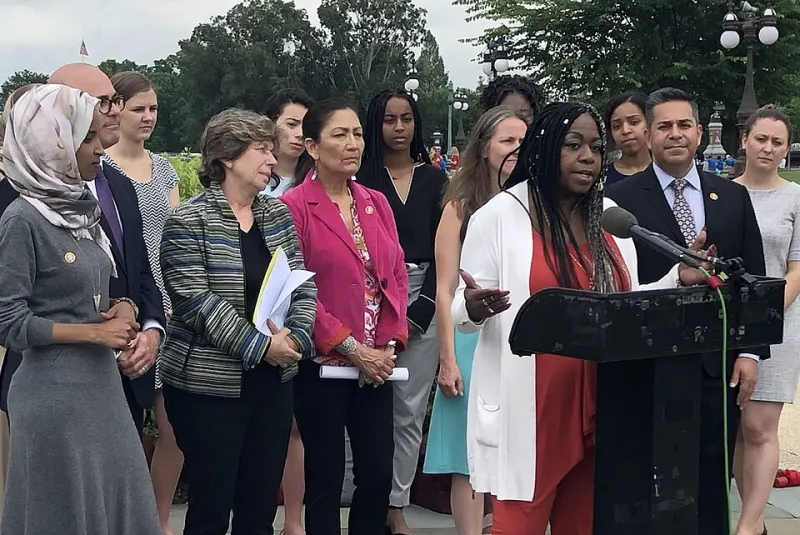
Devastating Parliamentary Report Enters Third Month of Not Technically Existing as Far as Anyone in Government Is Concerned
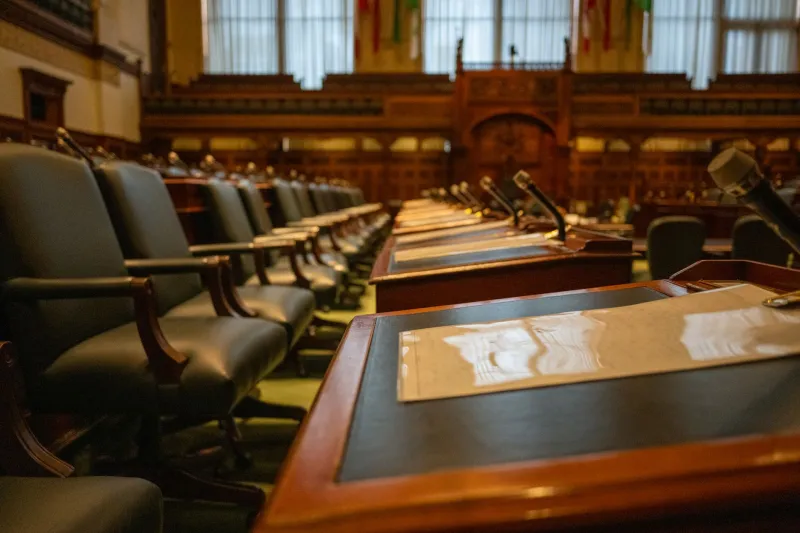
A landmark parliamentary report described by its authors as 'the most damning assessment of ministerial accountability since the committee system was invented' has this week entered its third consecutive month of not having been officially received by any of the ministers it concerns, in what constitutional scholars are calling either a sophisticated act of institutional evasion or a very long administrative coincidence.
The report, Accountability in Practice: A Cross-Departmental Review of Departmental Accountability Practices Across Departments (Final Report, Volume Three, Revised), was published on the fourteenth of February by the House of Commons Select Committee on Governmental Effectiveness, following eight months of hearings, forty-three witness sessions, and what the committee chair described as 'the most dispiriting sequence of Tuesday afternoons I have experienced in public life'.
 Photo: House of Commons Select Committee on Governmental Effectiveness, via assets.architecturaldesigns.com
At 400 pages, with a 47-page executive summary and a 12-page summary of the executive summary for ministers who do not read the executive summary, the report concludes, in unambiguous terms, that departmental accountability in the United Kingdom is 'structurally compromised, procedurally opaque, and in several cases apparently run by people who have not read their own department's guidance since it was last updated in 2011'.
The Problem of Receipt
Under normal parliamentary convention, relevant ministers are expected to respond to select committee reports within sixty days. The committee, mindful of recent pressures on ministerial time, extended this to ninety. The ninety-day window expired on the eighteenth of March.
No response has been received.
This is not, ministers have been at pains to clarify, because they disagree with the report, have chosen to ignore it, or are hoping that everyone will forget about it by the time the local elections are over. It is because they have not, in the technical sense, received it.
"I am not in a position to respond to a report I have not received," said the Minister for Departmental Affairs, the Rt Hon. Charles Gumble MP, in a written answer to a parliamentary question submitted on the twenty-second of April. "I understand that a report may have been published by the relevant committee. However, my department is currently conducting an internal review into the correct procedure for receiving reports of this classification, and it would be inappropriate to pre-empt that process by receiving the report before the review has concluded."
Asked when the review would conclude, a departmental spokesperson said the review was itself subject to a scoping exercise, which was expected to produce terms of reference by the autumn.
The PDF Question
Central to the dispute is a contested interpretation of the 2019 Document Receipt Framework, a guidance document produced by the Cabinet Office to standardise the process by which departments acknowledge formal correspondence.
Section 4, Paragraph 11 of the Framework states that a document is considered received when it has been 'formally transmitted via approved departmental channels in a format consistent with the receiving department's current document management protocol'. The select committee transmitted the report as a PDF.
Three departments have indicated, through their legal advisers, that a PDF does not constitute a document under Section 4, Paragraph 11, on the grounds that the Framework was drafted before the Cabinet Office's current document management protocol was adopted, meaning the protocol against which PDFs must be assessed does not, in a strict reading, exist yet.
"It is a fascinating legal question," said Professor Diane Chalk of the Institute for Parliamentary Procedure Studies at the University of Wolverhampton, who has been following the situation with what she described as 'professional fascination and personal despair'. "Essentially, the government has constructed a situation in which a public document, freely available to every citizen in the country, does not legally exist for the people it is about. It is, in its way, an achievement."
 Photo: University of Wolverhampton, via cdn.vox-cdn.com
Professor Chalk noted that her own institute had submitted a report to the Department for Education in 2021 that was still technically in transit.
The Report Itself
For those who have received the report — which, to be clear, includes every national newspaper, the BBC, several foreign correspondents, and a sixth-form politics student in Swindon who tweeted the key findings to 340 followers — its contents are not obscure.
Among its principal findings: three departments were unable to produce evidence that they had ever responded to a previous select committee report; one senior official told the committee that 'accountability' was 'not a term we use in day-to-day operations'; and a minister who appeared before the committee to discuss departmental performance admitted, under questioning, that he had been briefed for the session by someone who had not read the report being discussed, on the grounds that the report had not yet been formally received.
The committee chair, Dame Rosalind Thatch MP, described the evidence sessions as 'a masterclass in the appearance of engagement without any of the substance'. She has since written to the Cabinet Secretary requesting clarification on the PDF question. The Cabinet Secretary's office has confirmed receipt of the letter, which Dame Rosalind notes is 'something, at least'.
What Happens Next
The committee has indicated it may recall ministers for further questioning. Ministers have indicated they look forward to engaging with the committee's work at the appropriate time. The Cabinet Office has indicated it is keeping the situation under review. The situation has indicated nothing, as it is a situation.
A government spokesperson, asked directly whether anyone in Whitehall had read the report, said: "Ministers take the work of select committees extremely seriously and will respond in full once the relevant administrative processes have been completed."
The spokesperson did not confirm whether any minister had read the report.
The report remains available at parliament.uk. The statutory response deadline was the eighteenth of March. It is now considerably later than that.