Council's £1.8m Study Concludes: More Studies Definitely Needed

Breakthrough Moment for Evidence-Based Decision Making
After seven years of rigorous analysis, Middling Metropolitan Borough Council has successfully completed its landmark Feasibility Study into the Establishment of a Municipal Feasibility Assessment Unit (FSEUMFAU), conclusively determining that the question of whether the town requires a dedicated feasibility study department is, itself, too complex to answer without additional feasibility studies.
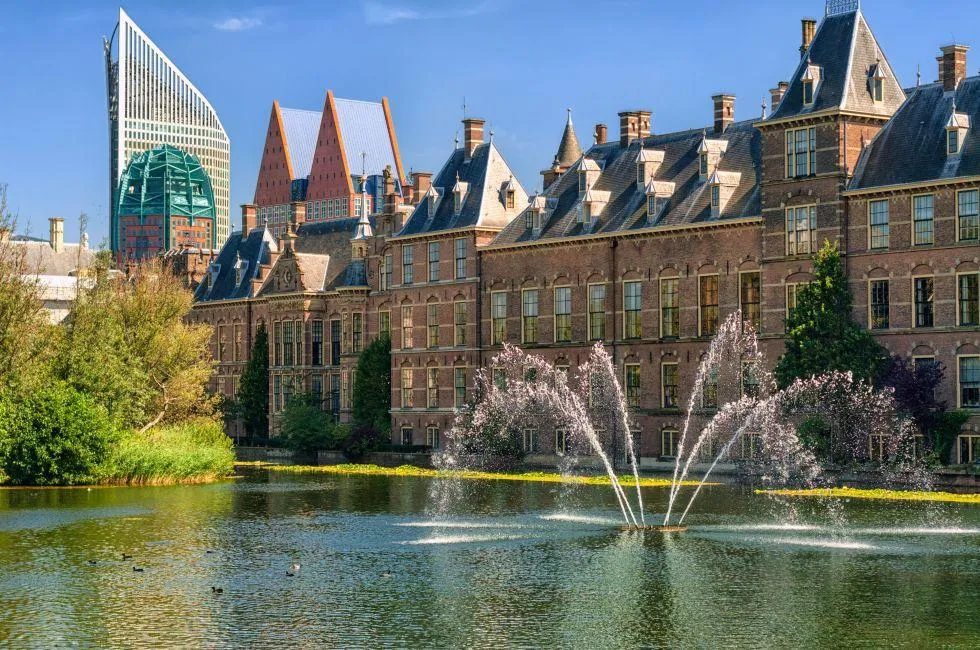 Photo: Middling Metropolitan Borough Council, via www.fodors.com
The £1.8 million investigation, which began in 2017 following a councillor's observation that "we seem to study things quite a lot," has produced a definitive 847-page report recommending the immediate commissioning of a meta-feasibility study to assess the feasibility of the original feasibility study's feasibility recommendations.
"This represents a watershed moment for evidence-based local governance," announced Council Leader Councillor Derek Prudent-Consideration during yesterday's press conference, held in the council's newly renovated Strategic Decision Contemplation Suite. "We now have concrete proof that we need more proof before we can prove anything."
Methodology Praised by Academic Community
The study's approach has drawn widespread acclaim from research methodology specialists. Professor Miranda Evidence-Based from the University of Somewhere's Department of Administrative Studies described the council's work as "a masterclass in comprehensive comprehensiveness."
 Photo: University of Somewhere, via blogger.googleusercontent.com
"What they've achieved here is remarkable," she explained. "They've successfully identified that the process of identifying whether they need a process for identification requires its own identification process. It's beautifully circular."
The research involved extensive consultation with 43 separate consultancy firms, each tasked with assessing different aspects of the feasibility assessment process. Consultants examined everything from the optimal number of consultants required to assess consultant requirements to the feasibility of assessing feasibility assessment feasibility.
Public Input Carefully Considered
Local resident Margaret Bewildered, whose original complaint about a broken streetlight in 2016 inadvertently triggered the entire investigation, expressed mixed feelings about the outcome.
"I just wanted them to fix the light," she explained. "But apparently that required a feasibility study into whether fixing streetlights falls within the remit of the proposed Feasibility Assessment Unit. Seven years later, I've learned that everything is very complicated and requires more study. The light's still broken, but at least now I understand why."
Fellow resident Brian Taxpayer was more philosophical: "£1.8 million seems like quite a lot to spend finding out that we need to spend more money finding things out, but I suppose that's what expertise costs these days. At least they're being thorough."
Cross-Party Political Support
The study has received unanimous support from across the council chamber, with opposition leader Councillor Janet Alternative-Perspective praising the ruling party's "commitment to not rushing into anything that might involve rushing into anything."
"This is exactly the kind of careful, considered approach that local government needs," she declared. "By taking seven years to decide whether we need a department to help us make decisions more quickly, we've demonstrated our absolute dedication to getting things right, even if it takes forever."
Councillor Nigel Fiscal-Responsibility, the council's finance portfolio holder, defended the project's cost: "£1.8 million might sound expensive, but when you consider that we've successfully avoided making any potentially expensive mistakes by not making any decisions at all, it represents excellent value for money."
Think Tank Response Pre-Emptively Brilliant
The prestigious Institute for Municipal Excellence (IME) has already published a 200-page response to the council's findings, despite the report only being released yesterday morning.
 Photo: Institute for Municipal Excellence, via florystyczneinspiracje.pl
"We anticipated that any serious feasibility study into feasibility studies would conclude that more feasibility studies were needed," explained IME Director Sir Roderick Preemptive-Analysis. "Our pre-response response addresses the likely recommendations of the recommended recommendations before they're officially recommended."
The IME's report, titled "Beyond Feasibility: Towards a Framework for Assessing Assessment Frameworks," calls for the establishment of a National Centre for Feasibility Study Excellence, which would provide guidance to local authorities struggling with the complex question of whether they're studying the right things in the right way.
Implementation Timeline Carefully Vague
Council officials have outlined a preliminary timeline for implementing the study's recommendations, beginning with a six-month consultation period to determine the optimal length of the consultation period for consultations about consultation periods.
"We're committed to moving forward expeditiously," explained Chief Executive Amanda Strategic-Patience. "However, it would be irresponsible to rush into expediting anything without first conducting a thorough assessment of our expedition capabilities."
The proposed Municipal Feasibility Assessment Unit, if eventually established following appropriate feasibility assessment, would employ between 12 and 47 staff members, depending on the outcome of a staffing feasibility study currently being scoped by external consultants.
Regional Impact Expected
Neighbouring councils have expressed keen interest in Middling's groundbreaking approach. Greater Somewhere Council has already commissioned its own feasibility study into whether it needs a feasibility study about feasibility studies, while Little Anywhere Borough is conducting preliminary research into the research required to research research requirements.
"It's tremendously exciting," noted Dr Patricia Administrative-Innovation from the Local Government Association. "We're witnessing the birth of a new era in municipal decision-making, where the decision to make decisions is itself subject to the same rigorous decision-making processes as the original decisions."
Future Prospects Remain Optimally Uncertain
As Middling Metropolitan Borough Council prepares to embark on the next phase of its feasibility journey, officials remain cautiously optimistic about the possibility of eventually reaching conclusions about their conclusion-reaching capabilities.
"We're confident that with sufficient study, we'll eventually determine whether we're studying things sufficiently," concluded Councillor Prudent-Consideration. "Until then, we'll continue to keep everything under careful review, which is exactly what good governance looks like."
The council's next major decision – whether to establish a committee to oversee the establishment of committees – is scheduled for consideration sometime in 2027, pending the outcome of a preliminary investigation into the optimal timing for timing-related decisions.