Flagship Modernisation Programme Enters Historic Year Eleven, Original Purpose Still 'Under Active Clarification'

Flagship Modernisation Programme Enters Historic Year Eleven, Original Purpose Still 'Under Active Clarification'
A government modernisation initiative solemnly unveiled in 2013 with a five-year delivery timeline has this week entered its eleventh year, with ministers confirming the programme remains 'on the cusp of transformative impact.' Officials have also confirmed that the original objectives are fully intact, largely because committing them to paper was itself identified as a deliverable and remains outstanding.
The programme — formally titled the Public Sector Transformation and Efficiency Modernisation Framework for a Better Connected Future — was launched by a minister who has since left politics, returned to politics, left again, and now chairs a consultancy that advises public sector bodies on transformation frameworks. He was unavailable for comment but wished the programme 'every continued success.'
A Journey in Five Phases (So Far)
The initiative was originally structured across five phases, each lasting one year, each building upon the last with what the original prospectus described as 'cumulative momentum.' Phase One concluded eighteen months late with a report recommending that Phase Two begin with a scoping exercise. Phase Two concluded with a report recommending that Phase Three incorporate learnings from Phase Two's scoping exercise. Phases Three and Four were, for administrative reasons that have never been fully explained, merged and then un-merged.
Phase Five was scheduled for completion in 2018. It is currently ongoing.
'We prefer to think of it not as an extension,' said a Cabinet Office spokesperson, speaking on condition of not being named, quoted directly, or held responsible for anything, 'but as a recognition that genuine transformation requires the space to breathe. The programme is breathing very well.'
When pressed on whether any of the original five objectives had been achieved, the spokesperson confirmed that 'significant progress has been made against a number of the objective-adjacent workstreams,' and that a summary document capturing this progress would be available 'in due course, once it has been through the appropriate clearance process.'
The clearance process was itself introduced in Phase Three as a modernisation measure.
What the Programme Was Supposed to Do
This is, admittedly, a matter of some debate. The original 2013 launch document — a forty-seven-page brochure printed on recycled paper with a photograph of a lighthouse on the cover — described the programme's purpose as 'catalysing a step-change in how government delivers for citizens by embedding a culture of continuous improvement across departmental silos.'
Former programme director Sandra Okafor, who held the role from 2015 to 2017 before being 'transitioned out' following a restructure, recalled the objectives somewhat differently. 'When I arrived,' she told this publication, 'I asked for the objectives document and was given the brochure. I asked for the strategy document and was given the objectives document, which turned out to also be the brochure. There was only the brochure.'
Ms Okafor now runs a consultancy advising public sector bodies on transformation frameworks. She wished the programme 'every continued success.'
Four Extensions and a Rebrand
The programme has been formally extended four times, in 2018, 2020, 2021, and 2023. Each extension was accompanied by a refresh of the programme's visual identity — the lighthouse was replaced by an arrow, then a bridge, then a sunrise, and currently a stylised tick that the programme's communications team describes as 'symbolising completion as a direction of travel rather than a fixed destination.'
Each extension was also accompanied by a new delivery partner. The current delivery partner, a consultancy called Meridian Futures Collaborative, was awarded the contract in 2022 following a competitive tender process that sources describe as 'largely competitive.' Meridian Futures Collaborative's founding director sits on the programme's advisory board. The programme's advisory board was established in 2019 to provide independent oversight. Its terms of reference specify that members must have 'relevant sector experience,' which all members do, primarily at other consultancies advising public sector bodies on transformation frameworks.
'We see no conflict,' said the advisory board's chair, in a statement released through a PR firm the programme also employs.
Experts Weigh In
Professor Alan Chidwick of the Institute for Public Administration Studies described the programme as 'a genuinely instructive case study in what happens when accountability mechanisms are treated as optional extras rather than core infrastructure.' He added that his institute had published three reports on the programme since 2016, none of which had been formally acknowledged by the programme's management team, and that he remained 'cautiously hopeful' this might change.
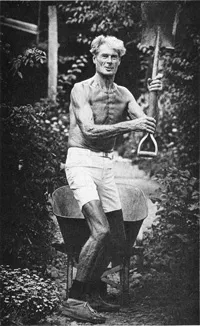 Photo: Professor Alan Chidwick, via alan-chadwick.org
A different expert, Dr Fiona Mears of the Centre for Delivery and Outcomes Research, was more measured. 'It would be wrong to say the programme has achieved nothing,' she said carefully. 'It has created a substantial body of documentation, supported a significant number of consultancy contracts, and provided meaningful employment for a rotating cast of programme managers. In terms of its stated purpose, the picture is, admittedly, more nuanced.'
Dr Mears's centre recently received a grant from the Cabinet Office to study why public sector transformation programmes underperform. The study is expected to take five years.
The Road Ahead
The current minister responsible for the programme — its ninth — addressed Parliament last month with what observers described as 'commendable confidence given the circumstances.' He confirmed that a new delivery plan was being finalised, that learnings from the previous delivery plans had been incorporated, and that he was 'genuinely excited about where we are headed.'
When an opposition MP noted that the programme had now cost £340 million more than originally budgeted and had not produced a single independently verified outcome, the minister replied that he was 'absolutely committed to value for money going forward' and that he would 'write to the honourable member with further details.'
The letter, a spokesperson later confirmed, would be sent once it had cleared the appropriate review process.
The programme, meanwhile, continues to breathe.