New Ethics Tsar's Landmark Ethics Guide Immediately Becomes Exhibit A in Ethics Investigation

Photo: government official signing documents formal office portrait, via images.stockcake.com
New Ethics Tsar's Landmark Ethics Guide Immediately Becomes Exhibit A in Ethics Investigation
The government's newly appointed Independent Adviser on Ministers' Interests has published what Whitehall sources describe as 'the most comprehensive ethical framework this country has ever produced,' a 180-page document covering conflicts of interest, transparency obligations, and the proper conduct of public life. Questions have since emerged about whether the adviser's own conduct, during the period in which he was writing the framework, might benefit from the framework's guidance.
The adviser, Sir Clement Haverstock, was appointed to the role in January following a competitive process that involved three candidates, two of whom withdrew. He has spent the intervening months producing the framework, which was launched at a well-attended Whitehall event on Monday. By Wednesday, the Financial Times had reported that Sir Clement had continued to draw fees from a proprietary consultancy advising FTSE-listed clients on regulatory compliance during the same period. By Thursday, the Cabinet Office had confirmed that the matter had been referred to the Independent Adviser on Ministers' Interests.
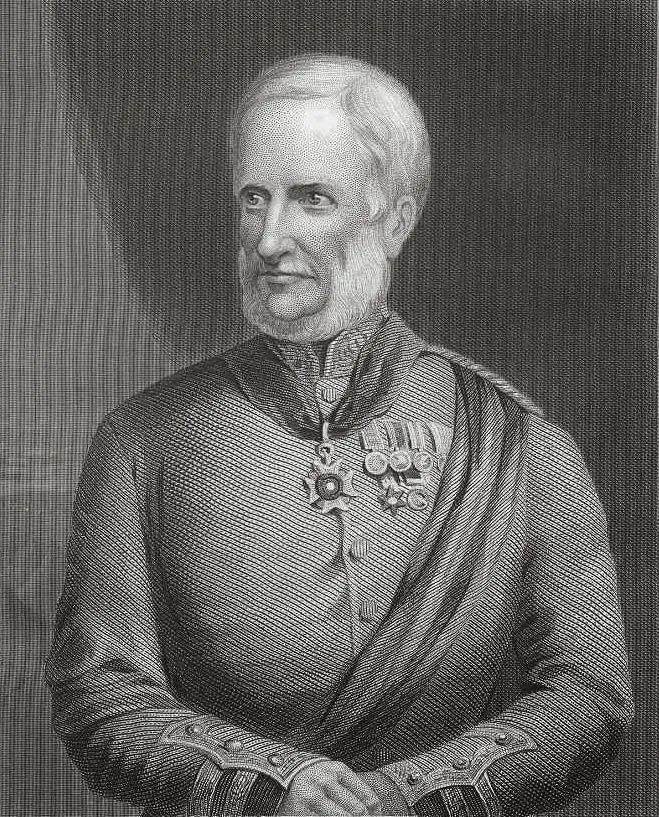 Photo: Sir Clement Haverstock, via blogger.googleusercontent.com
Sir Clement is the Independent Adviser on Ministers' Interests.
The Framework Itself
It would be unfair to allow the circumstances of its publication to overshadow the document, which is, by any measure, thorough. The Ministerial Interests: A Framework for Ethical Conduct in Public Life (Third Edition, Revised and Expanded) runs to 180 pages, contains fourteen chapters, three appendices, and a glossary that defines 'conflict of interest' across four pages with what one reader described as 'almost novelistic precision.'
Chapter Seven, 'Proprietary Interests and the Appearance of Impartiality,' is particularly detailed. It states, among other things, that public officeholders must 'take all reasonable steps to ensure that private commercial interests do not, whether in substance or in perception, compromise the independence of their public function.' It further notes that 'the test is not merely whether a conflict exists, but whether a reasonable observer might conclude that one could exist, might exist, or has existed at any point during the officeholder's tenure.'
Several observers have noted that this passage is, under the circumstances, doing a great deal of work.
Sir Clement's Position
Sir Clement released a statement on Thursday in which he described the reports as 'a mischaracterisation of a straightforward and fully disclosed arrangement.' He confirmed that his consultancy, Haverstock Advisory Partners, had continued to operate during his tenure as Independent Adviser, but stressed that he had 'taken careful steps to ensure appropriate separation between my advisory responsibilities and my private professional activities.'
Those steps, he explained, included 'maintaining distinct email accounts' and 'ensuring that meetings related to each function were, wherever practicable, held on different days of the week.'
When a journalist asked whether these steps were consistent with the framework's own guidance on conflicts of interest — specifically Chapter Seven — Sir Clement said he was 'confident that a thorough and independent review would find the arrangements entirely satisfactory,' and that he was 'committed to full cooperation with whatever process the appropriate authority determined was appropriate.'
The appropriate authority is Sir Clement.
The Cabinet Office Responds
A Cabinet Office spokesperson said the government 'took ethics extremely seriously' and that the referral to the Independent Adviser demonstrated 'the system working exactly as intended.' When it was pointed out that the Independent Adviser and the subject of the referral were the same person, the spokesperson said this was 'a question of process that the Independent Adviser was best placed to address' and referred further enquiries to Sir Clement's office.
Sir Clement's office said he would 'respond fully in due course, once he had had an opportunity to review the matter in his official capacity.'
The Cabinet Office confirmed that this was 'entirely appropriate.'
Expert Reaction
Professor David Quarrie of the Constitutional Governance Research Centre described the situation as 'an almost perfect closed loop.' 'What you have,' he explained, with the measured tone of a man who has long since stopped being surprised, 'is an individual who has written the rules, been found potentially in breach of the rules, and is now responsible for investigating whether he has breached the rules he wrote. From a purely academic standpoint, it's remarkable. We use case studies like this in seminars. Usually they're hypothetical.'
 Photo: Professor David Quarrie, via our.today
He added that the framework itself was 'genuinely very good' and that Chapter Seven in particular was 'some of the clearest writing on conflicts of interest he had encountered in thirty years of constitutional scholarship.' He paused. 'Which makes it all the more — yes. Quite.'
Lady Patricia Wenthorpe, a former civil service commissioner and crossbench peer, was more direct. 'The entire point of an independent adviser,' she said in a Lords debate on Thursday afternoon, 'is independence. If the adviser requires independent advice about whether he has been independent, we have not so much a conflict of interest as a philosophical crisis.' She called for the appointment of a temporary independent adviser to advise on the conduct of the Independent Adviser, pending the Independent Adviser's own conclusions.
 Photo: Lady Patricia Wenthorpe, via i.pinimg.com
The Cabinet Office said it would 'take Lady Wenthorpe's suggestion under consideration,' which constitutional scholars identify as the formal government phrase for 'no.'
The Framework's Legacy
Despite everything, the framework has been broadly welcomed by governance professionals, who describe it as long overdue. The previous guidance document, a twelve-page pamphlet produced in 2009, contained the memorable instruction that ministers should 'act with integrity at all times,' a standard that critics noted was both aspirational and comprehensively unenforced.
Sir Clement's 180-page replacement is, at minimum, considerably longer. Several departments have already announced plans to circulate it to staff. The Home Office has confirmed it will be included in induction materials for new ministers. The Cabinet Office is commissioning a training module based on its core principles, expected to be ready by 2026.
Sir Clement, meanwhile, has confirmed he will recuse himself from the investigation into Sir Clement, in the sense that he will conduct it but 'approach the matter with the utmost objectivity.' He expects to publish his findings within six weeks.
His findings will be reviewed by the Independent Adviser on Ministers' Interests.