DWP Solves Poverty by Removing the Word From All Official Documents
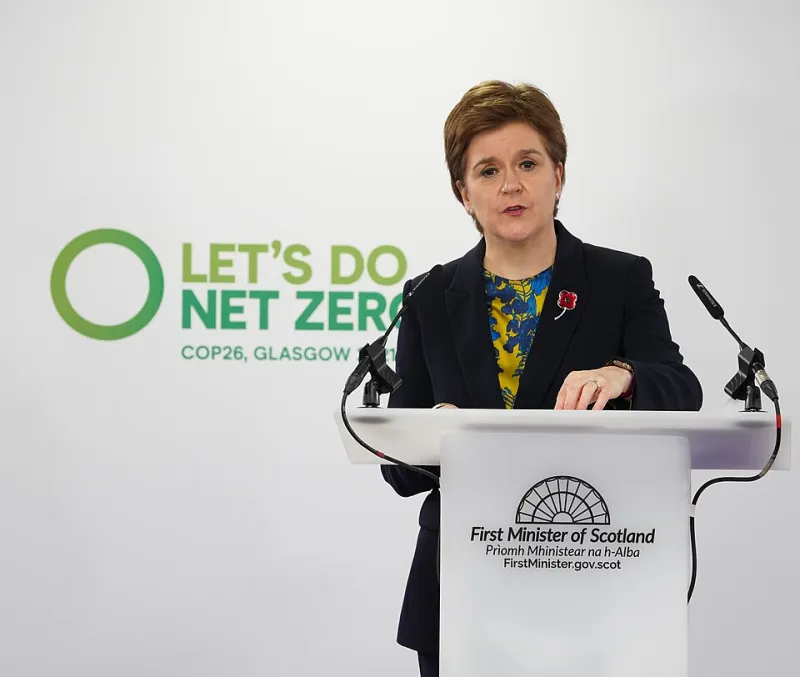
Photo: Scottish Government, CC BY 2.0, via Wikimedia Commons
Poverty in Britain has been eliminated. Not through investment, structural reform, or any measurable change to the circumstances of the 4.3 million people currently living in it — but through the considerably more cost-effective method of renaming it.
The Department for Work and Pensions confirmed this week that, following an eighteen-month engagement with Meridian Clarity Partners, a communications consultancy retained at a cost of £2.3 million, the department will henceforth operate under an entirely new official vocabulary framework. The framework, titled Towards a Language of Possibility: A Lexical Transition Roadmap for Social Outcomes Communication, replaces what officials described as "deficit-focused terminology" with language designed to be, in the words of the framework's executive summary, "forward-looking, agency-affirming, and statistically neutral."
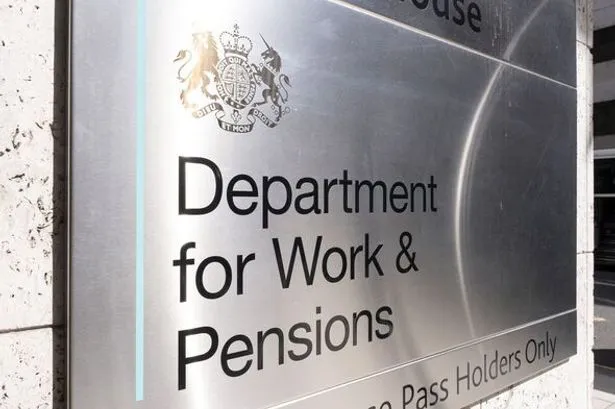 Photo: Department for Work and Pensions, via i2-prod.hulldailymail.co.uk
Poverty, under the new framework, will be referred to as "Sub-Optimal Prosperity Participation."
Destitution will become "Acute Resource Accessibility Constraint."
Hunger will be described as a "Nutritional Continuity Disruption Event."
Hardship, officials confirmed, will simply be called "a Resilience Development Opportunity."
The Framework Explained, At Length, By People Paid to Explain It
The Minister for Social Mobility and Opportunity — a title that has, since 2010, been held by eight different people, none of whom have measurably increased social mobility — presented the framework at a briefing on Wednesday attended by fourteen journalists, three think tank representatives, and one man who had arrived expecting a consultation on bus routes and was too polite to leave.
"Language shapes reality," the minister said, with the confidence of someone who has recently read the first chapter of a book about behavioural economics. "When we speak about citizens using limiting, negative frameworks, we risk entrenching the very mindsets that hold them back."
A journalist asked whether changing the word for poverty would affect the number of people experiencing it.
The minister said the question "showed exactly the kind of either/or thinking the framework was designed to move beyond."
A second journalist asked what the framework cost.
The minister said it represented "excellent value for a generational shift in social outcomes communication."
A third journalist asked whether Meridian Clarity Partners had any previous experience in social policy.
The minister's special adviser stepped in to note that the briefing would be wrapping up shortly.
Meridian Clarity Partners: A Brief Profile
Meridian Clarity Partners was founded in 2017 by two former special advisers and a brand strategist who had previously worked on a supermarket loyalty card rebrand. The firm specialises in what its website describes as "narrative architecture for complex public sector environments," which, the website clarifies, means "making difficult things sound like good things."
The firm's previous public sector work includes a 2021 project for a regional NHS trust that renamed its waiting list "the Active Patient Journey Queue," and a 2022 engagement with a transport authority that rebranded persistent service delays as "Dwell Time Flexibility."
Meridian Clarity Partners did not respond to a request for comment, as their communications team was, a receptionist explained, "currently in a narrative realignment session."
What the Think Tanks Think (It Depends on the Paragraph)
Three of Britain's most respected research institutions were asked to assess the framework's likely impact. Their responses were, in the tradition of the sector, simultaneously contradictory and entirely hedge-free.
The Institute for Social Policy Innovation described the vocabulary shift as "a potentially transformative reframing of the public discourse around material deprivation, with meaningful implications for how policymakers conceptualise intervention."
In the same report's third chapter, the Institute noted that "linguistic change absent structural reform has, historically, produced no measurable improvement in material outcomes."
The Centre for Inclusive Growth said the framework was "a welcome acknowledgement that language matters," while also noting in an appendix that "it does not, however, matter as much as money."
The Resolution Foundation said it had "significant concerns" about the framework, then released a fifty-page report elaborating those concerns in language so technically precise that the concerns became, by the final page, somewhat unclear.
All three institutions confirmed they would be available for further comment, at their standard day rates.
A Glossary for the Modern Age
The full framework runs to 214 pages, including a seventeen-page section on "transition grammar" and a four-page foreword from a professor of communications who describes the project as "Orwellian in the best possible sense," a sentence that appears to have been written without irony.
Among the highlights:
- Universal Credit sanctions will now be referred to as "Engagement-Activated Benefit Recalibration Events."
- Zero-hours contracts become "Flexible Workforce Participation Arrangements."
- Fuel poverty is recast as "Domestic Energy Optimisation Challenges."
- Homelessness, in what the framework calls "a particularly bold linguistic evolution," will be described as "Non-Fixed Residential Circumstance."
The framework notes, in a small-print caveat on page 189, that "this vocabulary transition does not constitute or replace policy intervention and should not be interpreted as a statement of outcomes."
This sentence is the most honest thing in the document.
Official Reaction
The Secretary of State for Work and Pensions called the framework "a genuine step forward in how we talk about and ultimately address the challenges facing the most vulnerable in our society."
She was asked whether the government planned any accompanying policy measures.
She said the framework "set the conditions for a broader conversation."
She was asked what that meant.
She said it meant the government was "listening, learning, and leading."
She was asked if those three things were happening simultaneously or sequentially.
Her special adviser said the Secretary of State had another engagement.
Meanwhile, in the Real World
Food bank usage in Britain reached a record high last year. Child poverty figures, under whichever name one prefers, have not meaningfully declined since the framework's commission was announced. The Joseph Rowntree Foundation, which has not yet adopted the new vocabulary and continues, somewhat unfashionably, to use the word "poverty," noted this week that approximately one in five UK households currently cannot afford an unexpected expense of £100.
Under the new framework, those households are experiencing a "Financial Resilience Optimisation Opportunity."
The department confirmed that this reframing was, in itself, entirely free of charge.
The £2.3 million, a spokesperson clarified, covered the "strategic consultancy, lexical development, stakeholder engagement, and implementation roadmap."
The implementation roadmap, The Daily Despatch understands, is also a document.
It cost £340,000.