Constituency Surgery Held Hostage by Scale Model, Forty-Seven Laminated Photographs, and a Man With Time
The surgery was supposed to run until noon.
At 11:47, the Member of Parliament for Brindleton South was still in the room. He had been in the room since 9:15. He had, in that time, drunk four cups of tea he had not asked for, nodded with an expression his caseworker later described as "technically attentive," and learned more about permitted development rights, drainage gradients, and the precise overhang of a pitched lean-to roof than any elected representative has been required to absorb since the Town and Country Planning Act 1990 was debated in committee.
 Photo: Brindleton South, via www.southmoorpark.co.uk
He had also been shown, using a laser pointer, the exact location of a damp patch on a cardboard model that represented, in 1:50 scale, his constituent's semi-detached house in Brindleton South and the offending structure attached to the house next door.
The constituent's name was Mr. Gerald Fitch. He was seventy-one. He was retired. He had, by his own account, "been waiting for the right moment to bring this to someone's attention."
That moment, it transpired, was now.
The Appointment: Background
MPs hold constituency surgeries — weekly or fortnightly sessions during which members of the public may bring local concerns to their elected representative — with the quiet optimism of people who have not yet met the public.
The surgery at Brindleton South Community Centre typically handles eight to twelve appointments per session. Matters range from housing benefit queries to passport delays, with occasional appearances from constituents who wish to discuss foreign policy, the decline of British manufacturing, or whether the MP has personally done anything about the A459 roundabout.
Friday's list included nine appointments. By 10:30, seven had been seen and sent on their way. The eighth was Mr. Fitch.
The ninth — a young woman with a question about Universal Credit — waited outside for one hour and forty minutes before quietly leaving. She left a note. The note said: "I'll try the website."
The Presentation Begins
Mr. Fitch arrived at 10:31 carrying two items: a wheeled suitcase and a rolled tube of the kind used to transport architectural drawings.
He set these down, shook the MP's hand, thanked him for his service to the constituency, and then, before the MP could establish what the appointment concerned, began unrolling a laminated site plan across the meeting table.
"I've done this properly," Mr. Fitch said. "I didn't want to waste your time."
The model emerged from the suitcase in three sections. Mr. Fitch assembled it with practised efficiency. It depicted, in considerable detail, two adjoining houses on Crestview Avenue, Brindleton, including — and the MP later confirmed this to a colleague — "working guttering made from drinking straws."
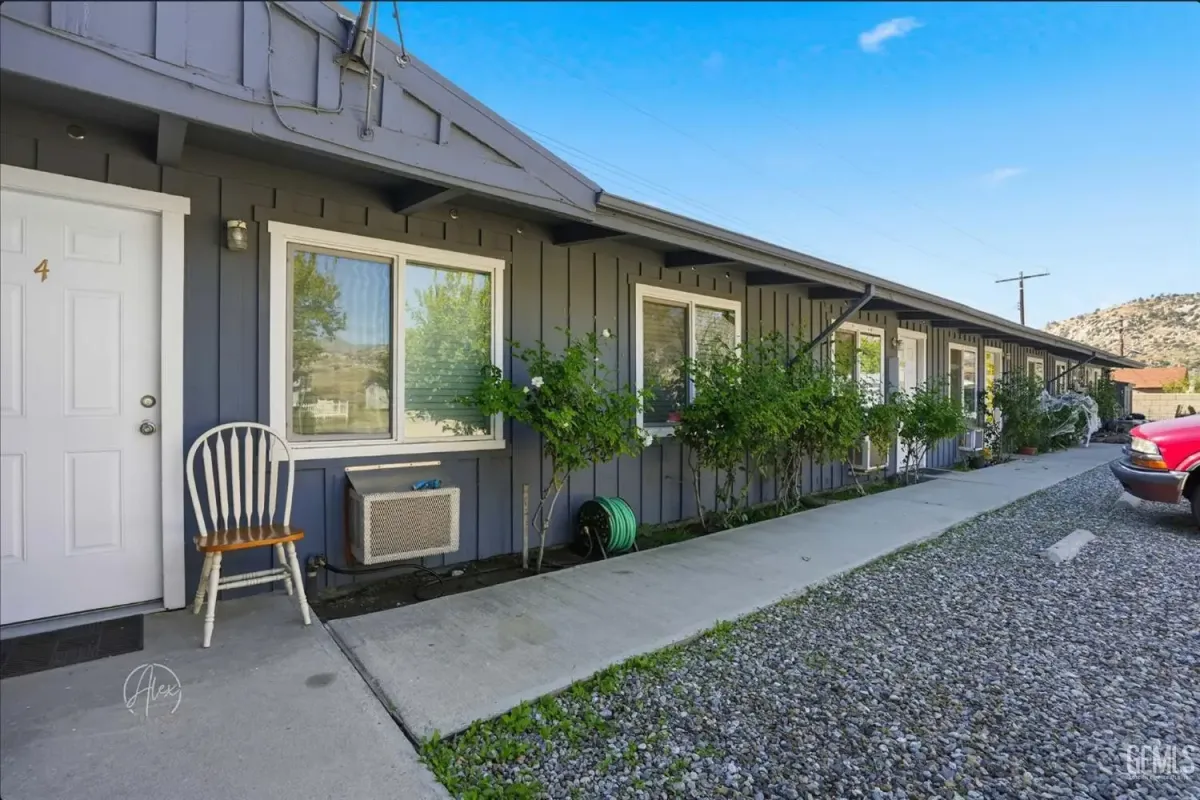 Photo: Crestview Avenue, via images-listings.bhgre.com
The laminated photographs — forty-seven in total, each individually numbered and cross-referenced to a bound appendix — documented the disputed structure from every conceivable angle across a period of what Mr. Fitch confirmed was "just over four years of systematic monitoring."
The bound appendix ran to sixty-three pages. It included a timeline, a glossary of planning terms, three letters to the council (with responses), two letters to the council (without responses), a printed copy of the relevant section of the National Planning Policy Framework annotated in red pen, and — in what Mr. Fitch described as "Appendix D, the technical data" — a hand-drawn cross-section of the extension's roof pitch illustrated with geometric precision.
"I was a civil engineer for thirty-eight years," Mr. Fitch explained. "I know how to present a case."
The MP said he could see that.
The Case Itself
The extension in question had been built by Mr. Fitch's neighbour — a Mr. David Hartley of 14 Crestview Avenue — in the summer of 2018. According to Mr. Fitch, the structure exceeded permitted development limits by approximately 340 millimetres along its eastern boundary, a discrepancy he had identified using a measuring tape, a spirit level, and, on one occasion, a theodolite borrowed from his son-in-law.
Mr. Fitch had reported this to Brindleton District Council in September 2018. The council had investigated, Mr. Fitch confirmed, and had found — he paused here, consulting the appendix — "in Mr. Hartley's favour, incorrectly, in my professional assessment."
Mr. Fitch had appealed. The appeal had been dismissed. He had written to the Planning Inspectorate. He had received a response he described as "boilerplate." He had written again. He had received the same response, with a different name at the bottom.
He had, at this point, decided to bring the matter to his MP.
The MP asked when the initial planning application had been submitted.
Mr. Fitch said April 2018.
The MP asked when it had been approved.
Mr. Fitch said March 2019.
The MP asked — carefully, in the manner of a man who senses something significant approaching — whether the extension was, at present, still standing.
Mr. Fitch confirmed that it was.
The MP asked whether Mr. Hartley still lived next door.
There was a pause.
"He moved," Mr. Fitch said. "Portugal. 2021. His daughter's out there."
The MP absorbed this.
"So the extension is there," the MP said, "but Mr. Hartley is not."
"The structure remains non-compliant," Mr. Fitch said, "regardless of the occupant."
The MP asked who currently lived at number 14.
Mr. Fitch said a young couple. Nice enough, he thought. Kept themselves to themselves. He had no quarrel with them personally.
"They're not responsible for the extension," Mr. Fitch clarified. "But the extension is their extension now. Legally."
The MP nodded for some time.
The Laser Pointer Section
At approximately 11:15, Mr. Fitch produced the laser pointer. He used it to indicate, on the scale model, the precise location of the 340-millimetre discrepancy, the drainage concern he had identified in photograph thirty-one, and a separate issue — "not the primary matter today, but worth noting" — involving a boundary fence that he believed had shifted by approximately eight centimetres during a resurfacing project in 2020.
The MP's caseworker, Sarah, who had been standing near the door throughout, later told a colleague that the laser pointer segment had lasted twenty-two minutes.
"He was very thorough," she said.
"He had a pointer," she added, as though this explained something.
Resolution (Of Sorts)
The MP confirmed, at the conclusion of the presentation, that he would write to the council requesting a review of the original enforcement decision.
Mr. Fitch thanked him, and said he had prepared a draft letter the MP might find useful as a starting point. He produced it from the appendix. It was four pages long.
The MP said he would have his office look at it.
Mr. Fitch began reassembling the model into the suitcase. He worked methodically. The MP helped with one of the sections.
"I appreciate you taking the time," Mr. Fitch said. "Most people don't bother with the detail."
The MP said it had been very thorough.
"I've got more," Mr. Fitch said, "if you want the full picture. I've got a second folder."
The MP said they might save that for a follow-up.
Mr. Fitch said that sounded sensible. He had time.
Outside, the ninth appointment had left forty minutes earlier. Her Universal Credit issue remained unresolved. The website, sources suggest, did not help.