Democracy Gets Recursive
The Cabinet Office announced today that it has launched what officials are calling "the most important consultation of our generation" – a comprehensive 12-week exercise seeking public views on the appropriate frequency of public consultations.
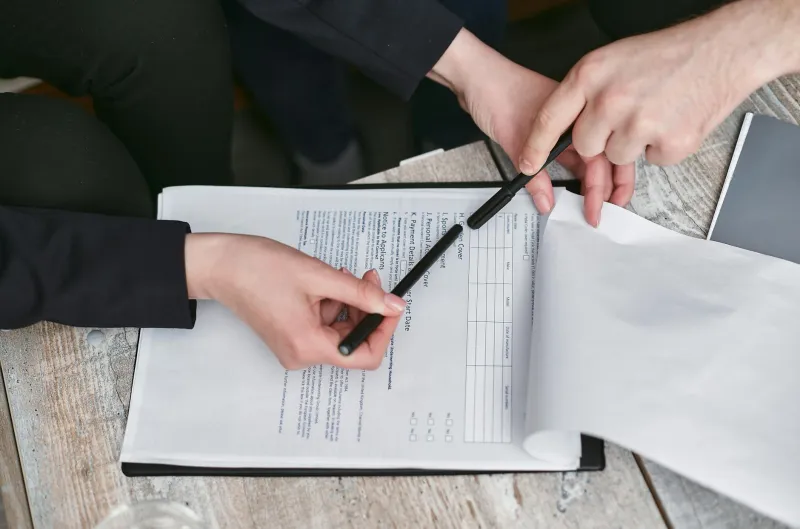
The 47-page document, titled "Consulting on Consultation: A Framework for Democratic Engagement Optimisation," asks respondents to indicate their preferred number of annual consultations across 23 government departments, rating their enthusiasm for various consultation formats on a scale of one to seven, and provide detailed feedback on the consultation process itself.
"This represents a quantum leap forward in democratic participation," explained Permanent Secretary Sir Nigel Whitworth-Smythe, who has overseen the implementation of 312 consultations during his eight-year tenure without noticing any particular pattern in the responses. "For too long, we've been consulting the public without first consulting them about whether they wanted to be consulted."
Unexpected Enthusiasm
The consultation has already received 47,000 responses, prompting the immediate launch of a counter-consultation to determine whether this level of engagement indicates optimal consultation frequency or dangerous over-consultation.
"We're genuinely surprised by the response," admitted junior minister Priscilla Hendricks-Waffle, who has responsibility for Democratic Process Optimisation across three departments she cannot name. "We expected perhaps a dozen responses, mostly from people who'd filled in the wrong form. Instead, we've got thousands of citizens actively engaging with the democratic process, which has created something of an administrative emergency."
The flood of responses has necessitated the creation of a Cross-Departmental Consultation Assessment Taskforce, which will spend the next 18 months analysing whether the public's views on consultation frequency should influence the frequency of consultations about consultation frequency.
Expert Analysis
Dr Miranda Fogsworth of the Institute for Democratic Participation Studies described the initiative as "exactly what democracy looks like in practice – confusing, circular, and generating far more paperwork than anyone anticipated."
"What we're seeing here is democracy eating its own tail," she explained while reviewing her seventeenth consultation response of the month. "The public is being asked to democratically determine the appropriate level of democracy, which is either brilliantly meta or completely mad. Possibly both."
Professor James Thornbury of the Centre for Government Excellence noted that the consultation had already achieved something remarkable: "For the first time in living memory, a government initiative has generated genuine public interest. The fact that this interest is focused on reducing the number of future government initiatives is, frankly, beside the point."
Escalating Complexity
The consultation process has become increasingly elaborate as officials attempt to manage the unexpected response. A dedicated helpline has been established to assist citizens confused by the consultation about consultations, though this has itself generated 3,400 calls requesting clarification about the helpline's purpose.
"We've had to create a working group to assess the working group that's assessing the consultation responses," revealed senior civil servant Margaret Blithering-Constant. "It's possible we've created some sort of administrative perpetual motion machine, but the important thing is that we're following proper procedure."
The Department for Levelling Up, Housing and Communities has contributed by launching a parallel consultation on whether consultations should be geographically levelled up, while the Treasury has commissioned a cost-benefit analysis of consultation cost-benefit analyses.
Public Response
Early analysis of responses reveals fascinating insights into public opinion. Approximately 23% of respondents have requested never to be consulted again, 31% want daily consultations on all government activities, and 46% have submitted detailed proposals for alternative democratic systems ranging from technocracy to rule by committee of randomly selected cats.
One respondent, identified only as "Concerned Citizen of Slough," submitted a 400-page response arguing that consultations should be replaced entirely by a system of interpretive dance, complete with choreographic diagrams and a suggested scoring system.
Future Implications
The consultation will close on March 15th, after which responses will be analysed by a specially convened panel of consultation experts, whose recommendations will be subject to a further consultation period before implementation.
"We're confident this process will provide definitive guidance on optimal consultation frequency," insisted Sir Nigel, while quietly hoping that most people would forget to fill in the form. "Democracy is complicated, but we're committed to getting it right, even if it takes several more consultations to determine what 'right' means."
The Cabinet Office has confirmed that a consultation on the effectiveness of the consultation consultation will be launched in 2025, pending approval from a committee that is currently being consulted about its own terms of reference.