
Revolutionary Accounting Principles Meet Modern Governance
The Treasury has unveiled what economists are calling "the most innovative approach to public finance since the invention of debt," confirming that this autumn's Budget will be entirely funded through underspends from previous promises not to raise taxes.
In a briefing document marked "For Immediate Understanding," Treasury officials outlined their pioneering fiscal methodology, which involves recycling the theoretical savings generated by abandoning commitments made in earlier fiscal statements.
"This represents a genuine breakthrough in transparent public finance," explained Treasury Economic Secretary Miranda Hartwell-Price. "Rather than the old-fashioned approach of finding actual money to fund actual spending, we've identified substantial resources in the form of money we're not spending on things we said we wouldn't do anyway."
Theoretical Underspend Maximisation Strategy
The centrepiece of the new approach is what Treasury sources describe as "negative expenditure harvesting" — a sophisticated accounting technique that converts abandoned policy commitments into available fiscal headroom.
According to internal Treasury calculations, the government has generated approximately £47 billion in theoretical savings since 2019 by not implementing various promises not to implement various tax rises. These "non-implementation dividends" now form the cornerstone of the autumn spending review.
"It's actually quite straightforward once you understand the underlying principle," noted Chief Treasury Analyst Dr. Penelope Worthington-Clarke. "Every time we don't not raise taxes that we promised not to raise, we create fiscal space equivalent to the theoretical cost of the tax rises we're not not implementing. The mathematics are absolutely watertight."
Expert Panel Reaches Unprecedented Consensus
The announcement has generated considerable interest among economic think tanks, with the Institute for Fiscal Studies convening an emergency panel to assess the implications.
 Photo: Institute for Fiscal Studies, via yt3.googleusercontent.com
"What we're seeing here is a fundamental reimagining of the relationship between commitment and expenditure," explained IFS Director Professor Timothy Blackwood-Stevens. "The Treasury appears to have solved the age-old problem of how to spend money you don't have by spending money you never had in the first place."
However, panel discussions have revealed some analytical challenges. The Centre for Economic Policy Research has struggled to reconcile the Treasury's figures with conventional accounting principles, while the Resolution Foundation has requested clarification on whether theoretical underspends can be theoretically overspent.
"We're dealing with some quite complex conceptual territory here," admitted CEPR Senior Fellow Dr. Marcus Pemberton-Williams. "Our initial analysis suggests the numbers either add up perfectly or don't exist at all. Possibly both simultaneously."
OBR Modelling Innovation and Methodological Breakthroughs
The Office for Budget Responsibility has been tasked with providing independent verification of the Treasury's calculations, a process that has required significant methodological innovation.
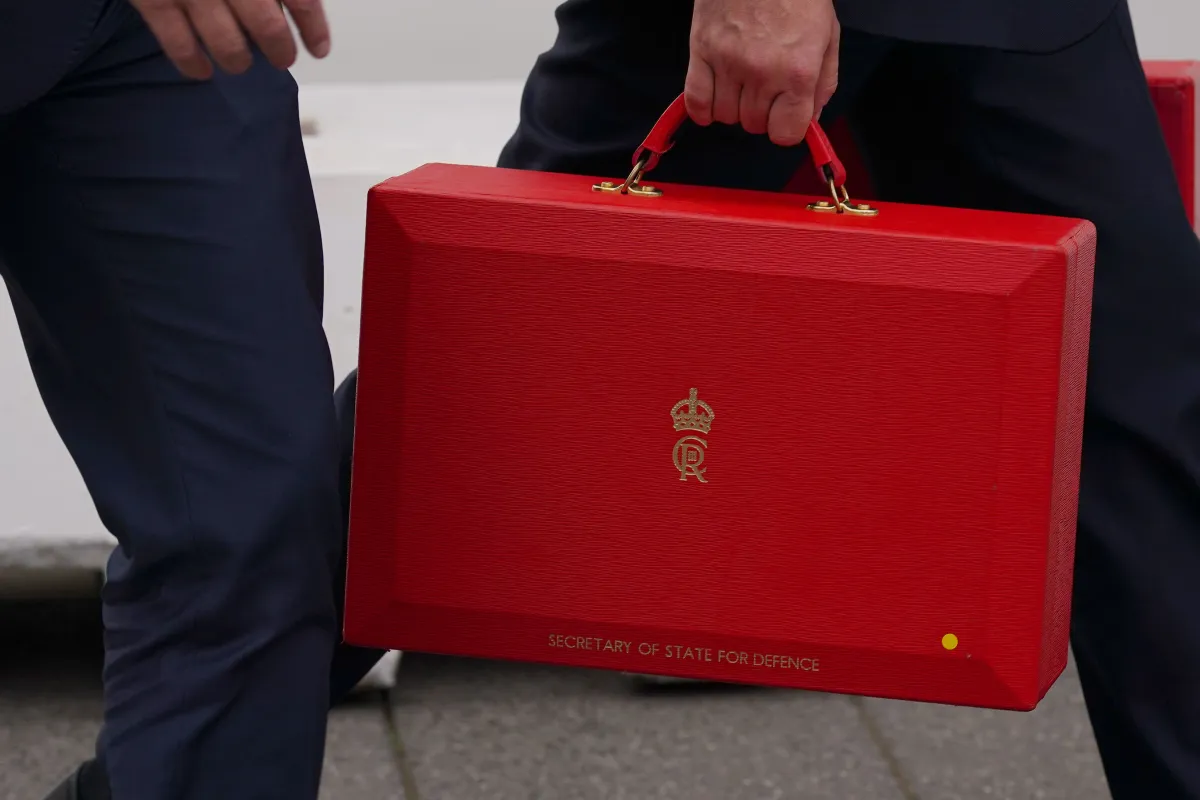 Photo: Office for Budget Responsibility, via static.independent.co.uk
OBR Chair Professor Sarah Thornley-Clarke confirmed that her organisation is currently modelling seventeen alternative definitions of the word "funded" to ensure comprehensive analytical coverage.
"We're exploring fascinating new territory in fiscal forecasting," Professor Thornley-Clarke explained. "Our preliminary models suggest that if you define 'funded' as 'theoretically fundable under optimal hypothetical conditions,' then the Treasury's approach represents best practice in evidence-based policy-making."
The OBR's supplementary analysis has also examined the sustainability of theoretical underspend recycling, concluding that the approach could generate unlimited fiscal headroom provided the government continues making commitments it has no intention of keeping.
Implementation Timeline and Stakeholder Feedback
Business groups have responded with characteristic enthusiasm to the Treasury's innovative approach. The CBI issued a statement describing the methodology as "exactly the kind of creative thinking British enterprise needs," while noting that they hadn't fully understood what they were endorsing.
"What's particularly encouraging is the government's commitment to fiscal responsibility through fiscal irresponsibility," explained CBI Director-General Amanda Worthington-Price. "It shows they're serious about balancing the books by unbalancing them in a strategically balanced way."
The Opposition has offered qualified support for the Treasury's initiative while questioning its scope. Shadow Chancellor Angela Pembroke-Stevens welcomed the "innovative approach to not funding spending through not not spending money," though she suggested the government could go further by not not not raising taxes they've promised not to raise.
International Recognition and Academic Interest
The Treasury's approach has attracted attention from international finance ministries, with several G7 partners reportedly studying the British model for potential adaptation.
"What the UK has achieved here is genuinely groundbreaking," noted Professor Klaus Vandenberg of the European Institute for Fiscal Innovation. "They've demonstrated that fiscal responsibility isn't about having money — it's about having a sophisticated understanding of not having money in ways that create space for having money you don't have."
The International Monetary Fund has also expressed interest, with Managing Director Kristalina Georgieva describing the British approach as "a fascinating case study in post-conventional monetary theory."
 Photo: International Monetary Fund, via c8.alamy.com
Future Applications and Strategic Development
Treasury sources suggest this autumn's Budget represents just the beginning of a broader transformation in government finance methodology. Plans are already underway for next year's spending review, which will be funded entirely through theoretical surpluses generated by not implementing policies that were never formally proposed.
"We're moving towards a genuinely sustainable model of public finance," confirmed Treasury Permanent Secretary Sir Nigel Hartwell-Clarke. "One where government spending is limited only by our imagination and our ability to explain why imaginary money is actually real money that we're choosing not to spend on things we never intended to buy."
As one senior Treasury official noted, speaking on condition of anonymity: "Finally, we've found a way to make the numbers work. Admittedly, we had to redefine what numbers are and what working means, but that's just good government."