Self-Assessment Reaches New Heights of Circularity
In what officials are describing as a 'natural evolution of accountability frameworks,' the Office for Standards in Education has completed its first comprehensive self-inspection, applying its own methodology to evaluate its own performance in a process that has left everyone involved feeling slightly dizzy.
The resulting 47-page report, titled 'An Assessment of Our Assessment of Assessments,' concludes that Ofsted is performing at a level best described as 'adequate plus,' a rating that Chief Inspector Amanda Spielman explained represents 'exactly the sort of measured progress we would expect to see from any organisation committed to continuous improvement, which we obviously are.'
 Photo: Amanda Spielman, via c8.alamy.com
Methodology Meets Reality
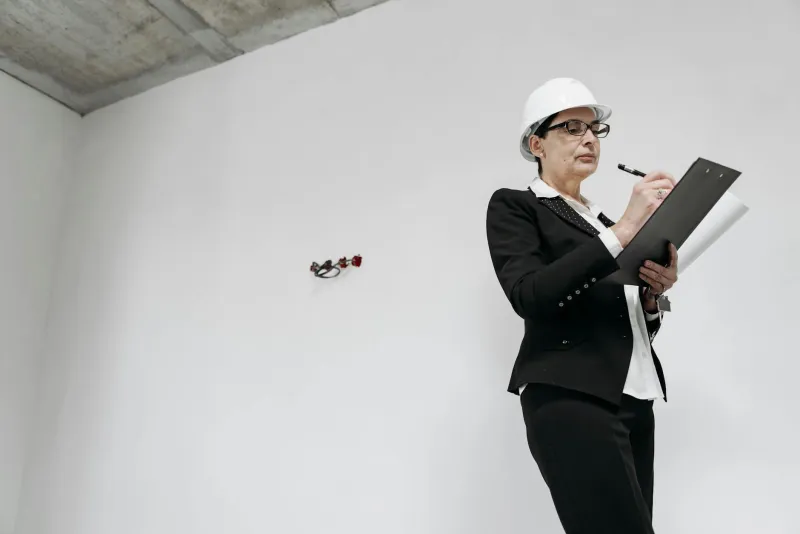
The inspection team, comprising three senior Ofsted officials who had never previously met themselves professionally, spent four days observing their own meetings, scrutinising their own paperwork, and conducting interviews with their own staff about their own performance.
'The process was remarkably smooth,' noted Lead Inspector Sarah Whitfield, who was simultaneously the subject of her own investigation. 'We found ourselves to be generally cooperative, though there were moments of defensive behaviour when pressed on certain sensitive topics, particularly around our inspection of ourselves.'
The report highlights several areas of strength, including Ofsted's 'consistent application of inconsistent standards' and its 'robust commitment to providing feedback that schools find simultaneously vague and overly prescriptive.' However, inspectors identified significant concerns about the organisation's 'tendency to inspect schools without first inspecting whether the inspection process itself requires inspection.'
Key Findings Raise Important Questions
Particularly troubling was the discovery that Ofsted had been operating for nearly three decades without once checking whether its own offices met the educational standards it demands of others. The inspection revealed that the organisation's headquarters lacks a proper playground, offers no GCSE provision, and has never once achieved a 'Good' rating from itself until now.
'We were frankly appalled to discover that we've been failing to meet our own expectations of ourselves,' admitted Deputy Chief Inspector Marcus Thompson. 'It's exactly the sort of oversight we would criticise schools for, which is ironic, because we're the ones who would normally be doing the criticising.'
The report recommends that Ofsted establish a new department specifically tasked with monitoring its monitoring of its own monitoring processes. This Department for Self-Surveillance will report directly to a newly created Independent Panel for Overseeing Oversight, which will itself be subject to annual inspections by a body yet to be determined.
Expert Analysis Provides Clarity
Professor Janet Middleton of the Institute for Educational Accountability described the findings as 'a breakthrough in recursive governance.' She explained: 'What we're seeing here is the logical endpoint of the inspection culture—the inspector inspecting the inspector who inspects the inspectors. It's beautifully circular, like a Möbius strip made of clipboards.'
 Photo: Institute for Educational Accountability, via cardinalinstitute.com
The National Union of Teachers responded to the report with what union leader Kevin Courtney described as 'profound confusion mixed with grudging respect for the sheer audacity of it all.' He added: 'They've managed to create a system where they can simultaneously be the problem and the solution to their own problem. It's almost artistic.'
 Photo: Kevin Courtney, via images.squarespace-cdn.com
Implementation Timeline Remains Fluid
Ofsted has committed to implementing all recommendations from its self-inspection by 2031, subject to a comprehensive review of whether those recommendations adequately address the recommendations about reviewing recommendations.
The organisation will also establish a new Quality Assurance Framework for Quality Assurance Frameworks, overseen by a Director of Directorial Oversight whose performance will be monitored by a committee that includes themselves as the primary stakeholder.
'This represents a genuine commitment to transparency,' explained Chief Inspector Spielman. 'We're not just talking about accountability—we're actively holding ourselves accountable for holding ourselves accountable, which is precisely the sort of accountability that accountability demands.'
The next self-inspection is scheduled for 2029, pending the completion of a feasibility study into whether self-inspections can feasibly inspect themselves, which is currently under review by a panel that is reviewing the review process for reviewing reviews.