The Art of Strategic Neutrality
Sir Nigel Blandsworth's parliamentary office walls tell the story of a truly exceptional political career. Photographs show him nodding thoughtfully alongside every Prime Minister since John Major, participating earnestly in select committees spanning everything from agriculture to defence, and maintaining the same expression of concerned interest that has served him so reliably for thirty-eight years.
'Nigel has always understood that the key to political longevity is never giving anyone a reason to remember what you actually think,' reflects former Cabinet Secretary Sir Jeremy Heywood. 'He's mastered the art of being simultaneously essential and completely forgettable, which is arguably the highest form of statecraft.'
Indeed, Blandsworth's trajectory from backbench obscurity to the House of Lords represents perhaps the purest distillation of modern political success—a career built not on conviction, but on the strategic absence thereof.
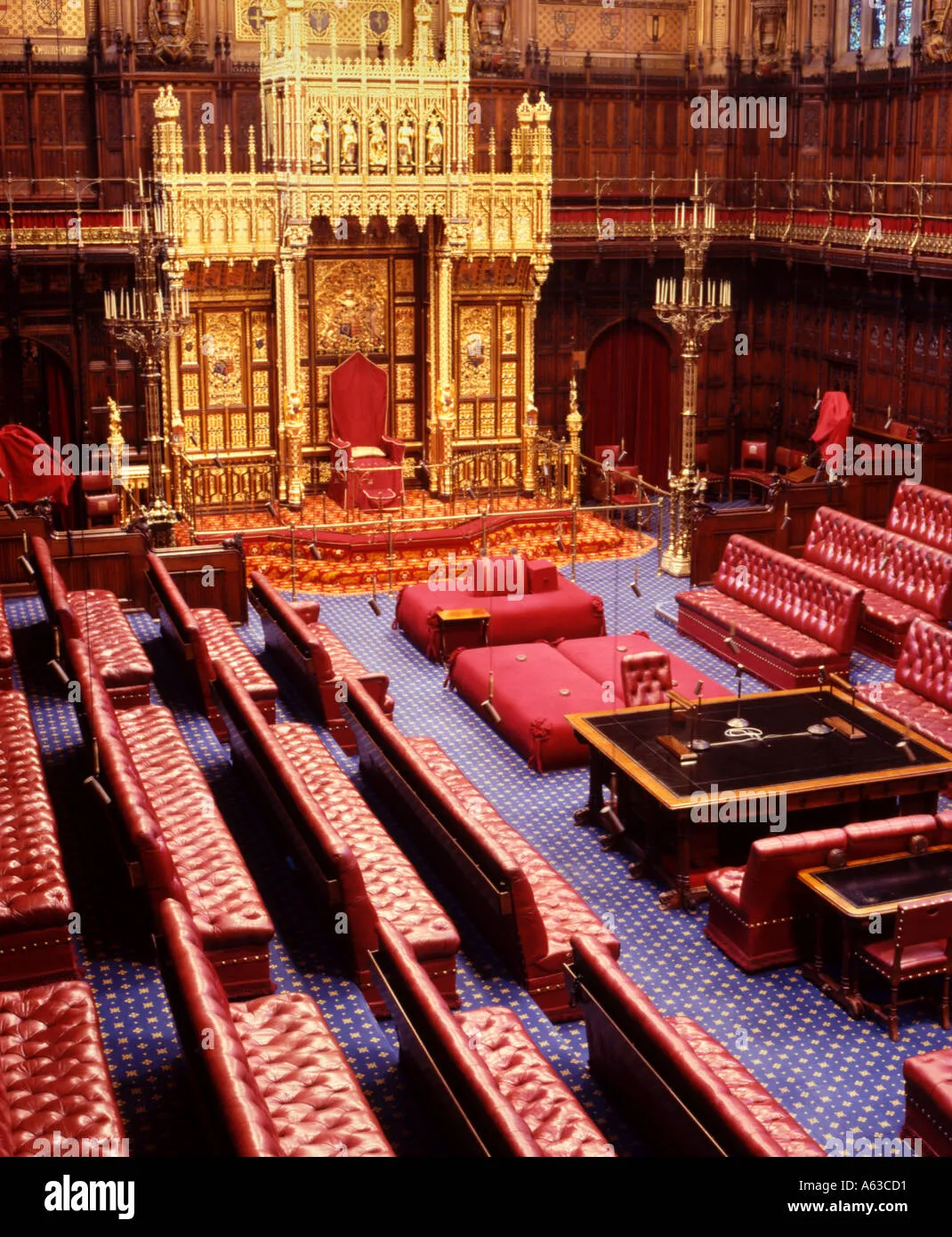 Photo: House of Lords, via c8.alamy.com
The Early Years: Learning to Say Nothing Eloquently
Blandsworth's political awakening came during his university years at Oxford, where he famously served as president of both the Conservative Association and the Labour Club simultaneously—an achievement he describes as 'simply a matter of listening carefully to what everyone wanted to hear.'
'Even then, Nigel had this extraordinary gift for making you feel like he completely understood your position whilst never actually expressing one of his own,' recalls former flatmate Timothy Ashworth-Price. 'We'd argue about politics for hours, and somehow Nigel would end up moderating between positions he'd never taken, reaching compromises nobody had asked for.'
This talent served him well in his early parliamentary career, where his maiden speech—a masterful 847-word exploration of why 'the issues facing our constituency are complex and multifaceted'—established him as someone who could be relied upon to contribute nothing controversial to any debate.
The Breakthrough: Perfecting Political Ambiguity
Blandsworth's career-defining moment came during the 1997 election campaign, when he managed to canvass the same street for both the Conservative Party (morning) and New Labour (afternoon) without technically lying to anyone. His campaign literature, which featured the slogan 'Nigel Blandsworth: Committed to What Matters Most,' became a template for political communications across the spectrum.
'Nigel understood something fundamental about modern democracy,' explains political scientist Dr Sarah Thornfield. 'Voters don't actually want politicians to have strong opinions—they want politicians who make them feel like their own opinions are reasonable and well-informed. Nigel perfected the art of reflecting people's views back to them whilst adding absolutely nothing of his own.'
This insight propelled Blandsworth through a series of increasingly senior positions, each selected precisely because his appointment would offend nobody whilst pleasing everyone in abstract principle.
The Ministerial Years: Excellence Through Inaction
As Minister for Regional Development (2003-2007), Blandsworth oversaw what colleagues describe as 'the most comprehensively non-controversial tenure in departmental history.' His greatest achievement—successfully avoiding any policies that might disadvantage any regions whilst also avoiding any that might particularly advantage them—earned him recognition as 'exactly the sort of safe pair of hands we need in these uncertain times.'
'Nigel had this remarkable ability to chair meetings where everyone left feeling like their concerns had been heard and their priorities understood, despite nothing whatsoever having been decided,' recalls former civil servant Margaret Whitehouse. 'It was like watching a master craftsman at work, if the craft was professional indecision.'
His subsequent role as Shadow Minister for Everything Important But Not Controversial cemented his reputation as someone who could be trusted with any brief precisely because he would never do anything memorable with it.
The Question Time Phenomenon
Perhaps nowhere has Blandsworth's genius been more evident than in his nineteen appearances on BBC's Question Time, where his ability to respond to any question with variations of 'I think most reasonable people would agree that this is exactly the sort of issue where reasonable people might reasonably disagree' has made him the programme's most requested guest.
'Nigel brings a unique quality to political debate,' explains Question Time producer Rachel Morrison. 'He has this gift for making everyone feel like they've won the argument whilst ensuring that no actual argument has taken place. It's tremendously calming for our audience.'
Viewers consistently rate Blandsworth as 'the most sensible person on the panel,' despite post-programme surveys revealing that nobody can recall a single specific thing he said.
The Lords Appointment: A Natural Conclusion
Blandsworth's elevation to the House of Lords was announced simultaneously by Downing Street and the Opposition leader's office, both claiming credit for recognising his 'outstanding contribution to consensual politics.' His acceptance speech, in which he pledged to 'continue bringing the same measured approach to the important work of careful consideration that has always guided my commitment to thoughtful deliberation,' was universally praised as 'exactly what we needed to hear.'
Legacy of Productive Ambiguity
As Blandsworth prepares for his new role chairing the All-Party Parliamentary Group for Achieving Consensus on Achieving Consensus, his influence on British politics seems destined to endure.
'Nigel has shown us that in an age of polarisation, there's tremendous value in politicians who can unite people around the shared understanding that some things are more complicated than they might initially appear,' reflects constitutional expert Professor David Henley. 'He's created a template for political success that requires no policies, no principles, and no particular beliefs beyond the belief that believing things too strongly is probably inadvisable.'
It's a legacy that speaks to something profound about modern democratic culture: in an era where having the wrong opinion can end careers, perhaps the greatest political skill is the discipline never to have any opinions at all.