Britain's AI Future Secured by Taskforce That Discovered Artificial Intelligence Approximately Eleven Weeks Ago

Britain's AI Future Secured by Taskforce That Discovered Artificial Intelligence Approximately Eleven Weeks Ago
The United Kingdom's artificial intelligence strategy — described by the Cabinet Office as 'the most ambitious technology roadmap in a generation' and by at least one independent reviewer as 'a document that raises more questions than it was aware it was asking' — was published on Monday to considerable fanfare and a launch event in a government building where the Wi-Fi did not work.
 Photo: Cabinet Office, via www.ksicabinetry.com
Powering Britain's AI Future: A Strategic Framework for Intelligent Innovation in the Public Sector and Adjacent Ecosystems (First Edition) runs to 214 pages, includes seventeen references to 'responsible innovation pipelines', and was produced over eleven weeks by the Cabinet Office AI Opportunity Taskforce, a body assembled with considerable urgency last autumn following a meeting in which a senior official asked whether the government had a position on artificial intelligence and the room went quiet for slightly too long.
The Team Behind the Vision
The taskforce was constituted from existing civil service talent, which is to say from people who were available. Its lead author, Deputy Director Clive Morston, joined from the Department for Transport's Regional Connectivity Division, where he spent six years overseeing the procurement of signage for the A-road improvement programme. He describes his transition into AI policy as 'steep but rewarding'.
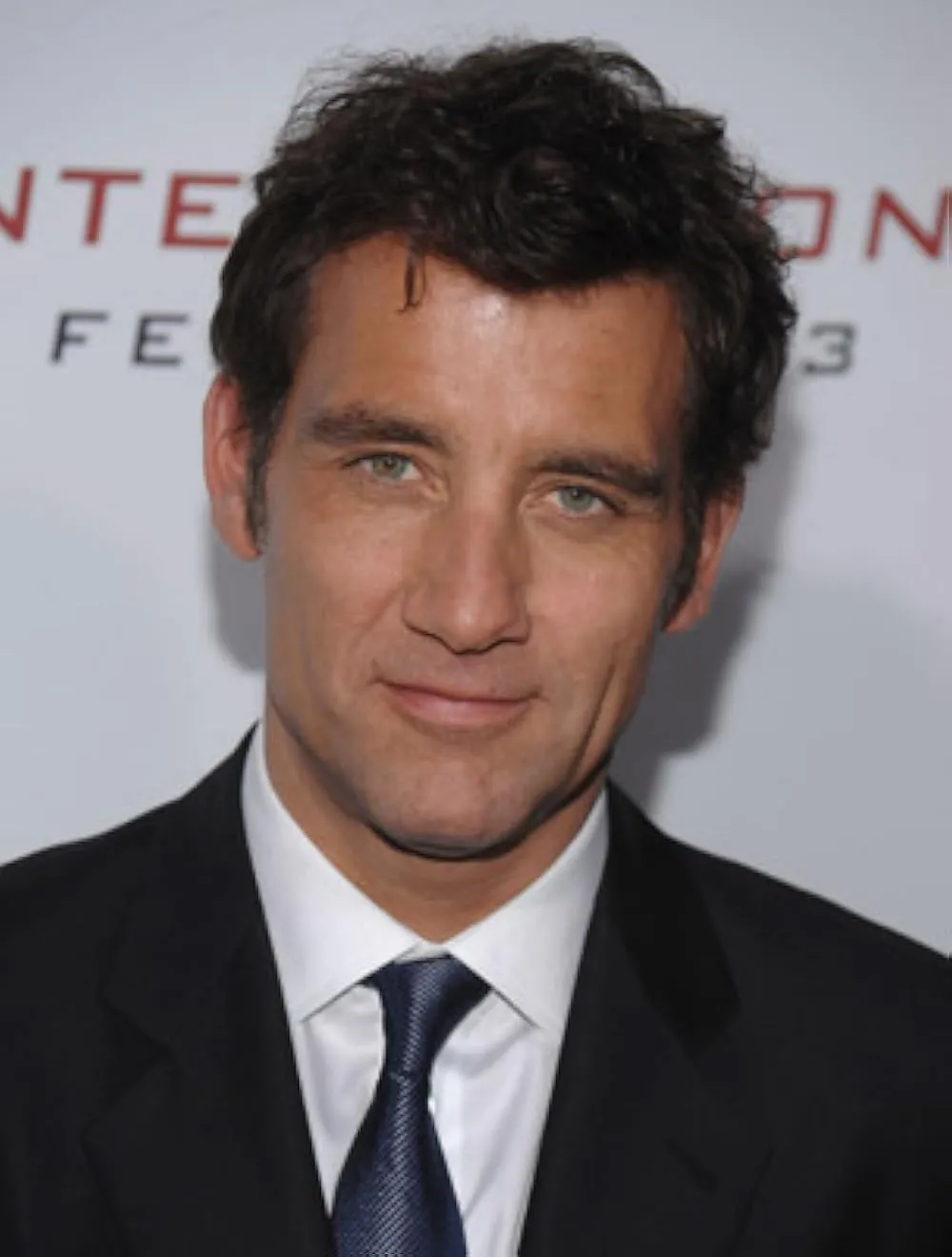 Photo: Clive Morston, via m.media-amazon.com
"I'll be honest, I had not given a great deal of thought to machine learning before November," Mr Morston told a public engagement event in January, with a frankness that his communications team subsequently described as 'unscheduled'. "But once you start reading about it, you realise the possibilities are genuinely enormous. We've been using one of the chatbot tools to help draft sections of the strategy, which has been a real time-saver, and I think that experience has given us a very grounded, practical perspective on what this technology can do."
Asked whether using an AI tool to write an AI strategy represented a conflict of interest or at minimum a slightly circular methodology, Mr Morston said it was 'more of a collaborative approach', which the taskforce had documented in an appendix.
The appendix in question, Appendix F: Human-AI Co-Production in Policy Development: A Worked Example, notes that the strategy was produced using 'a hybrid authorship model in which AI-generated draft content was reviewed, refined, and occasionally corrected by human team members with relevant expertise'. The relevant expertise is not defined. The appendix was, a source confirmed, also partially drafted using the tool.
What the Strategy Proposes
The strategy is organised around five strategic pillars, which are: Accelerate, Innovate, Integrate, Collaborate, and Evaluate. These were arrived at, according to a footnote, because they 'form a coherent action-oriented framework' and, according to a separate source familiar with the drafting process, because someone noticed they all ended in '-ate' and felt this gave the document a sense of momentum.
Pillar One, Accelerate, calls for 'rapid deployment of AI-enabled solutions across public sector touchpoints', a phrase that appears fourteen times in the document and means, as best as independent analysts can determine, using software more.
Pillar Three, Integrate, proposes the establishment of a National AI Integration Hub, which will coordinate AI adoption across government departments, produce quarterly progress reports, and 'serve as a centre of excellence for the responsible innovation ecosystem'. The Hub does not yet exist, does not have a budget, and will require its own strategy document before it can begin operating, which the taskforce estimates will take between six and eighteen months depending on 'stakeholder alignment timelines'.
Pillar Five, Evaluate, contains a commitment to assess the strategy's effectiveness after three years using metrics that will be developed within the first year. The metrics for assessing the metric development process will be established separately.
The Self-Recommendation Incident
The document's most discussed passage — at least among the small community of people who read government AI strategies in full — appears in Chapter Nine, Models of Excellence: International and Domestic Benchmarks. In a section identifying leading examples of AI strategy development globally, the document cites, as its third example of best practice, itself.
The citation reads: "The Cabinet Office AI Opportunity Taskforce Framework (2024) represents a significant contribution to responsible AI governance, offering a replicable model for jurisdictions seeking to balance innovation with accountability." A footnote directs the reader to Chapter One of the same document.
Dr Amara Osei, a technology policy researcher at University College London who reviewed the document for a parliamentary briefing, described the self-citation as 'technically unprecedented in my experience of government publications, though I want to be careful not to rule out that it has happened before, possibly in documents that cited themselves too many times to notice'.
 Photo: University College London, via c8.alamy.com
The taskforce, informed of Dr Osei's observation, issued a statement describing the citation as 'an illustration of the document's confidence in its own findings', which it characterised as 'a sign of internal coherence'.
Industry Response
The technology sector's response to the strategy has been cautiously warm, in the manner of someone being handed a casserole dish and not wanting to ask what is in it.
A spokesperson for the UK's leading AI industry body said the strategy contained 'many of the right words in broadly the right order', and that the sector 'welcomed the government's commitment to engagement', which is the thing you say when you have not yet decided what you actually think.
A former government chief technology officer, speaking anonymously, said the document reminded him of 'every AI strategy produced by every government since 2016, which is either reassuring or alarming depending on your view of continuity'.
The strategy commits the government to becoming 'a world leader in responsible AI by 2030', a target it shares with the AI strategies of France, Germany, Canada, Singapore, Japan, South Korea, and, at last count, the United Arab Emirates. The taskforce has described this as 'a sign of global alignment'.
What Happens Now
Implementation of the strategy will be overseen by a newly formed AI Delivery Board, which will hold its first meeting once its membership has been confirmed, its terms of reference approved, and its meeting room booked — a process expected to take until late summer.
Mr Morston, who will chair the Delivery Board in an acting capacity pending the appointment of a permanent chair, said he was looking forward to the work ahead.
"AI is moving incredibly fast," he said, at the launch event, gesturing at a slide that appeared to be loading. "And this strategy positions Britain to move with it. Or, at minimum, to move in a broadly similar direction, at a pace that reflects our institutional capacity."
The Wi-Fi was restored approximately forty minutes after the event concluded.